/services · tape transfer
Tape transfer & digitization
Transfers of reel-to-reel tape, cassette, DAT and other legacy formats: every item physically evaluated, played back on calibrated machines and captured to archival-quality files.
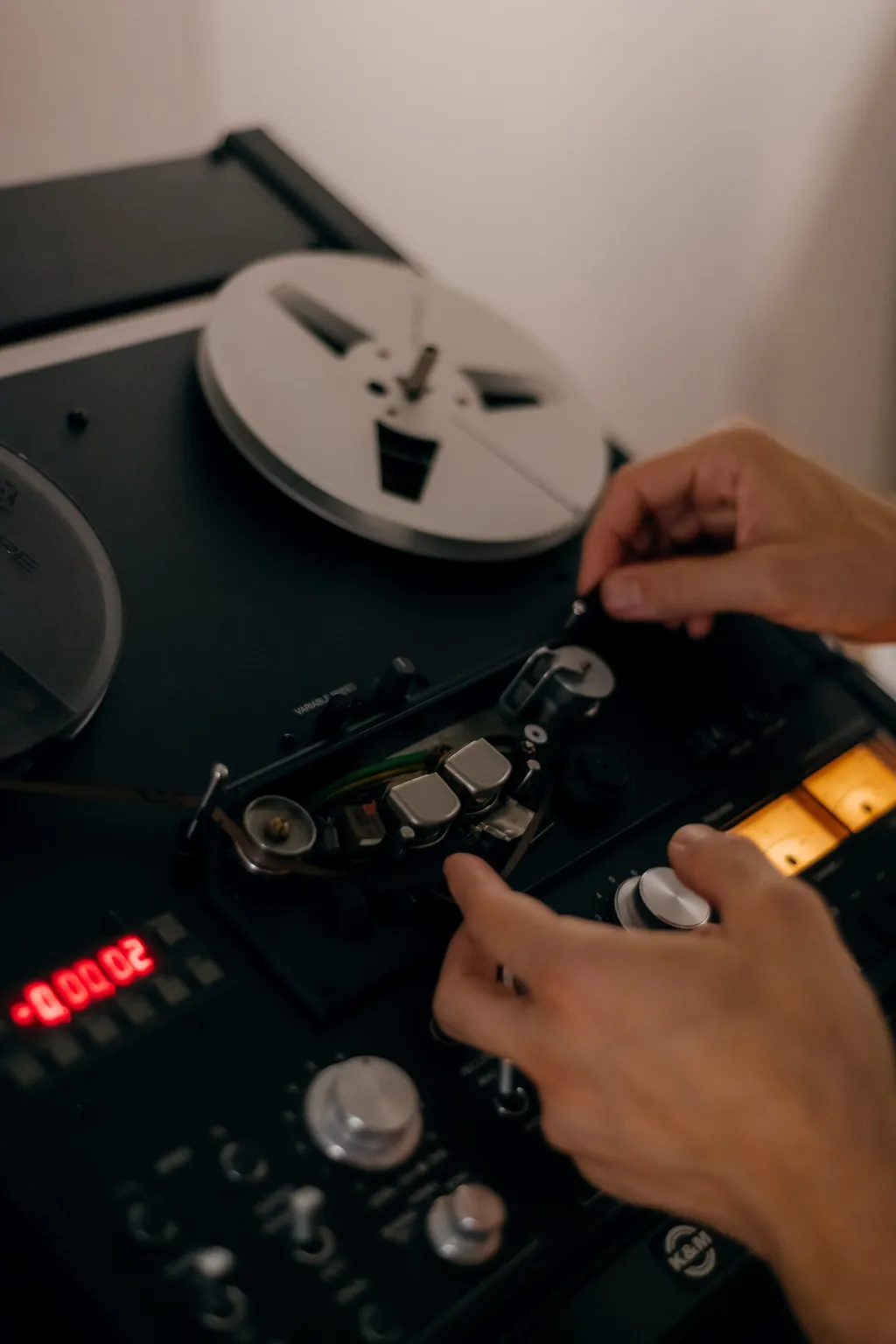
Many transfers done today lack proper quality control. They carry artifacts that clients are led to believe were on the original media: poor frequency response, wow and flutter, incorrect or unstable speed. A good transfer gets the most out of the tape before any processing, and that is where most of the quality is won or lost.
At Qualia every tape is inspected before it is played. Machines are aligned to the tape, speed and azimuth are checked, and the transfer is monitored on a calibrated system from start to finish.
Formats we transfer
| Medium | Notes |
|---|---|
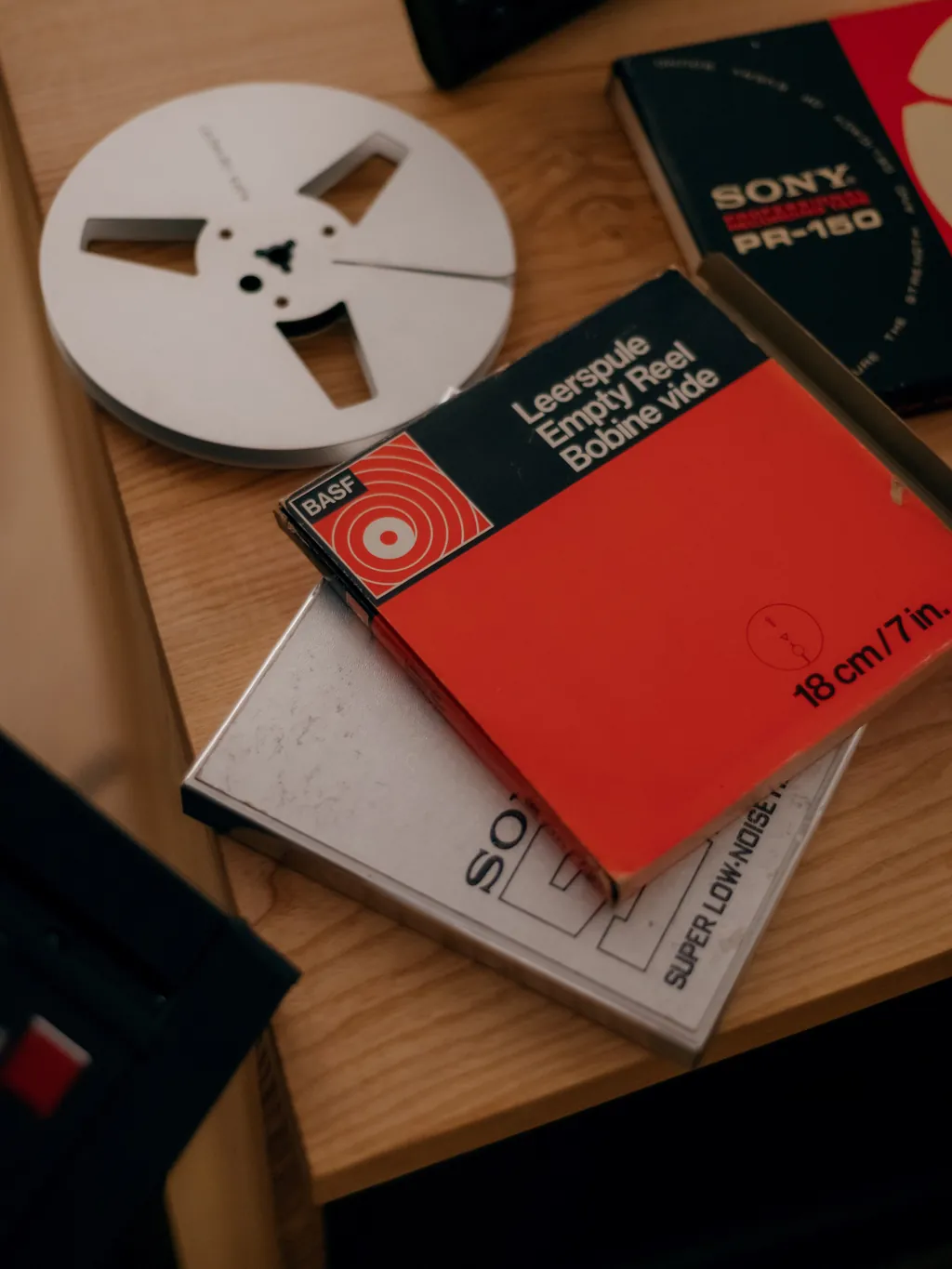
| 1/4" reel-to-reel tape | 2-track and 4-track; slow speeds such as 4.76 cm/s included |
| Compact cassette | |
| DAT | Digital audio tape, cloned to file |
| MiniDisc | |
| CD and CD-R | |
| PCM on Betamax / VHS | Digital masters recorded with PCM-F1-type processors |
| Vinyl, shellac and acetate discs | See audio restoration |
| Other legacy formats | Ask: we recovered audio from a 1965 IBM Magnabelt dictation belt with CuriousMarc |
Single items and bulk orders are both welcome.
How a transfer is done
- Assessment. Each item is physically evaluated - tape stock, splices, edge damage, odour, signs of sticky-shed or binder hydrolysis - before it goes near a machine.
- Conditioning and cleaning. Tapes with aging problems are conditioned in a dry environment before unspooling, and the transport is cleaned between tapes when oxide or back-coat sheds.
- Playback alignment. Speed, track format, equalisation and azimuth are set for that specific tape.
- Capture. High-resolution capture to WAV/BWF, typically 24-bit / 96 kHz for analogue sources, following IASA recommendations.
- Quality control and delivery. Every file is checked. You receive the unprocessed archival transfer, and, if you want it, a restored listening copy.
What you receive
- Archival master files (WAV/BWF) with embedded metadata
- Optional restored and mastered listening copies: see audio restoration
- A short report on the condition of the material and anything found during the transfer
For institutions and larger collections, see archives and preservation.
Frequently asked questions
My tapes are old and smell of vinegar or are sticky. Can they still be played?
Often yes, but they should not be played on a domestic machine first: a sticky tape can shed oxide and be damaged further in one pass. Get in touch before trying; we assess the tape and condition it before playback.
I don't know the speed or track format of my tapes.
That's normal, and part of the assessment. Speed, track layout and equalisation are identified at the studio before transfer.
Do you clean up the sound as well?
The archival transfer is kept unprocessed, as the reference. Restoration - noise, clicks, hum, wow and flutter - is a separate, optional step done on a copy. See audio restoration.
Can I send tapes by post?
Yes. Get in touch first and we'll explain how to pack them safely. Clients in the Lisbon area can also bring material to the studio in Sintra by appointment.
/contact
Tell us about your project
Describe the material or the music, the format, quantity and any deadline. You'll get a reply with how we'd approach it.